During a recent technical SEO review of a WordPress website, I found several important pages appearing under the “Crawled – currently not indexed” report inside Google Search Console.
The pages were accessible, published correctly, and already connected to the website structure, yet Google was still choosing not to index them consistently.
At first, the issue looked like a normal indexing delay. However, after reviewing the crawl and indexing reports more closely, it became clear that several smaller structural inconsistencies were affecting how Google processed the website.
This case study explains what I found inside Google Search Console, what was preventing the pages from being indexed consistently, and the practical fixes applied to improve indexing stability over time.
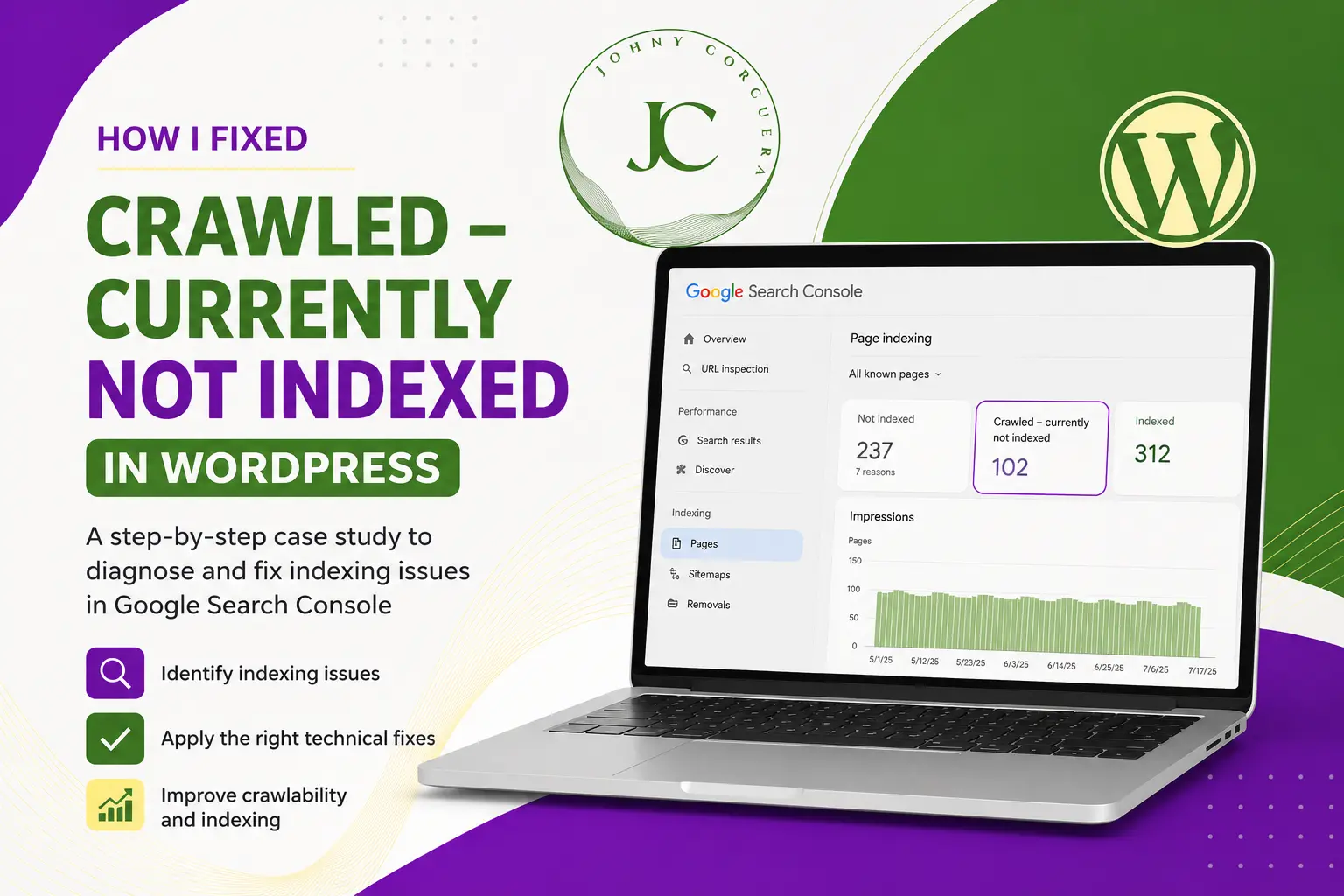
The first step was reviewing the Page Indexing report inside Google Search Console.
Several important URLs were grouped under:
The affected pages were mostly service and supporting content pages that should normally have been indexed without difficulty.
After checking the URL Inspection reports, Google was clearly able to access the pages, but the indexing process was still inconsistent across different sections of the website.
The crawl reports also suggested that Google was spending unnecessary crawl activity on lower-value URLs instead of prioritizing the pages that mattered most.
After reviewing the website structure more carefully, several issues became more visible.
One of the main problems involved weak internal linking between important pages. Some pages existed in the sitemap but were not strongly connected through the main content structure of the website.
The site also contained unnecessary WordPress-generated URLs that added crawl noise across the website, including archive variations and low-value attachment pages.
Additional issues included:
Individually, these issues were relatively small. However, together they weakened indexing consistency across the website.
To better understand the issue, I reviewed the website using both Google Search Console and Screaming Frog.
Google Search Console helped identify:
Screaming Frog helped identify:
Reviewing both tools together made it easier to identify where crawl inefficiencies and indexing inconsistencies were happening across the website structure.
Once the indexing problems became clearer, I focused on refining the areas affecting crawl prioritization and indexing consistency.
The updates included:
I also reviewed how pages were connected throughout the website to ensure important content could be discovered more naturally through internal navigation instead of relying only on sitemap discovery.
Rather than repeatedly requesting indexing inside Search Console, the focus was placed on improving the overall crawl and structural signals surrounding the affected pages.
After the refinements were implemented, indexing behavior gradually became more stable.
Several pages that previously remained excluded began appearing more consistently in Google’s index, while crawl activity became more focused on the website’s primary pages instead of lower-value URLs.
Over time, the website experienced:
The improvements were not caused by a single technical change, but by refining multiple smaller structural issues affecting how Google processed the website.
One of the biggest lessons from this project was that indexing problems are not always caused by major technical errors.
In many WordPress websites, indexing inconsistencies develop gradually through weak internal linking, unnecessary URL generation, crawl inefficiencies, and inconsistent structural signals.
Google may still crawl the pages successfully, but that does not always mean the pages provide enough structural importance to remain consistently indexed.
Improving crawl consistency often comes down to refining how pages connect, how unnecessary URLs are managed, and how clearly important content is prioritized across the website.
“Crawled – currently not indexed” issues can become difficult to diagnose when multiple smaller technical inconsistencies exist across a WordPress website.
In many cases, the problem is not simply that Google cannot access the page, but that the surrounding crawl and structural signals are too weak or inconsistent to support stable indexing.
Reviewing crawl behavior, sitemap quality, internal linking, and overall website structure together often provides a much clearer understanding of why pages struggle to remain indexed.
If your website is experiencing similar indexing inconsistencies inside Google Search Console, you can also explore my Technical SEO Services page to learn more about how technical SEO improvements support crawlability, indexing consistency, and long-term search visibility.
Local Events
Private Events